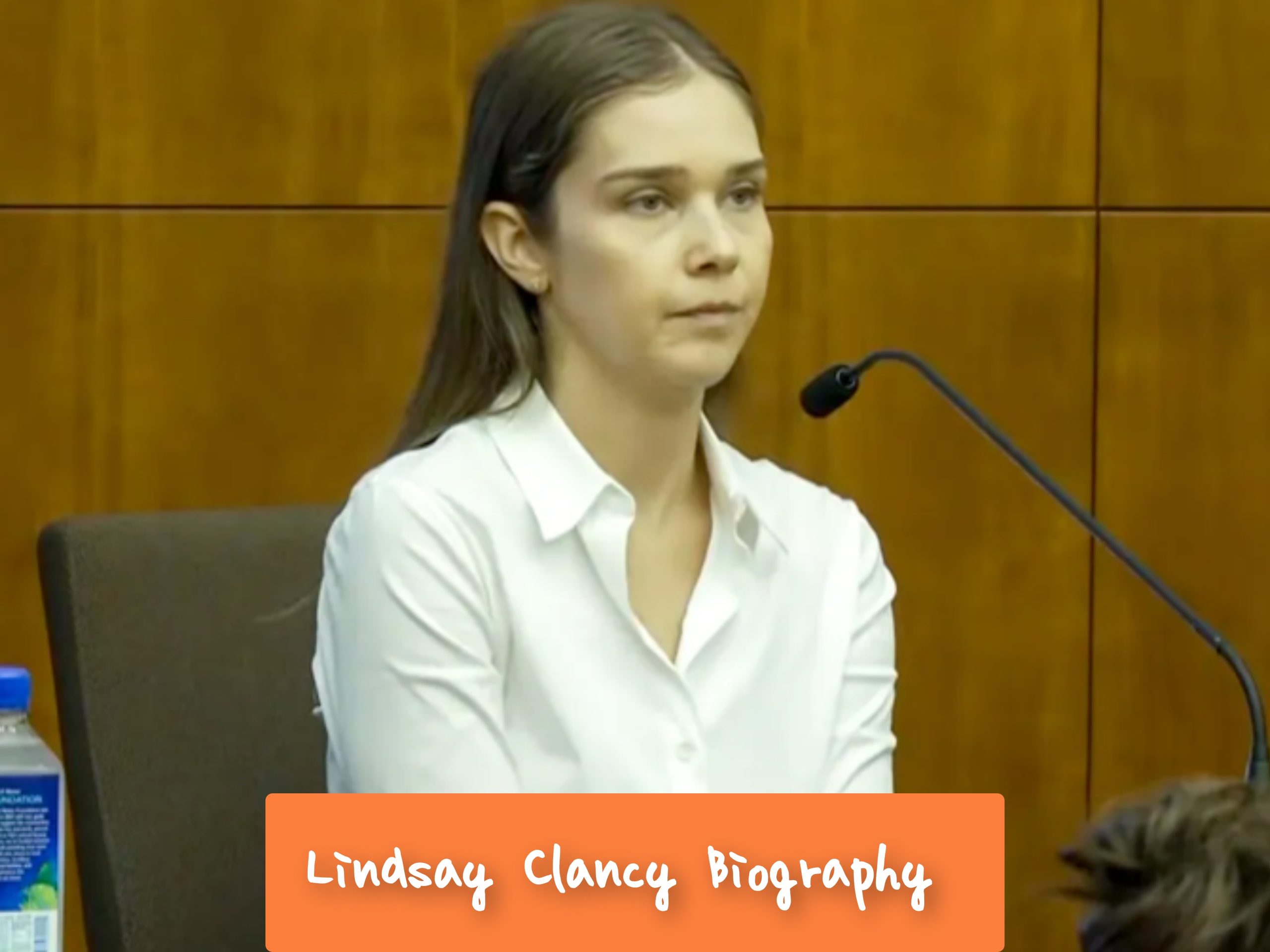
Lindsay Clancy Murder Trial
The murder trial of Lindsay Clancy, the Duxbury, Massachusetts mother accused of killing her three young children in January 2023, is now in its second week in Plymouth Superior Court, with prosecutors and the defense presenting starkly different pictures of what happened inside the family’s Summer Street home that night.
Clancy, now 35, has pleaded not guilty to charges of first-degree murder. She has admitted to killing 5-year-old Cora, 3-year-old Dawson and 8-month-old Callan on January 24, 2023. The central question for the jury is not whether she caused her children’s deaths, but whether she can be held criminally responsible for them. Her defense argues she is not criminally responsible because she was overmedicated and experiencing extreme postpartum psychosis at the time.
What Prosecutors Say Happened
According to the Plymouth County District Attorney’s office, Clancy strangled her three children before attempting to take her own life. Prosecutors allege the killings were not a sudden break but a planned act. At her arraignment, a prosecutor in DA Tim Cruz’s office said Clancy “created the situation and she used Apple Maps to make sure she would have enough time to strangle each child before her husband returned from where she had sent him,” adding that she acted “with deliberate premeditation and extreme atrocity and cruelty.”
Court documents describe how Clancy, a former labor and delivery nurse, sent her husband, Patrick, out on errands, first to a CVS in Kingston and then to pick up dinner in North Plymouth. Prosecutors say Clancy strangled her children and then took a phone call from her husband during that window. Cora and Dawson died in the home, while Callan was still alive when paramedics found him severely injured; he died later at Children’s Hospital. Clancy is charged with three counts each of murder and strangulation.
Unsealed search warrants have also revealed that Clancy kept journals documenting her prescriptions for depression as well as her general feelings, including entries referencing self-harm and expressions of wanting to harm her children, according to court records.
The Defense’s Case
Clancy’s attorney, Kevin Reddington, has consistently argued that his client was gravely mentally ill and overmedicated at the time of the killings, not a calculating killer. At a court appearance last year, Reddington told the court, “She obviously had no reason to kill those three beautiful children. You have to ask yourself why… it’s readily apparent that this woman was a troubled soul.”
That defense strategy has continued into trial. Testimony this week from forensic scientists with the Massachusetts State Police Crime Laboratory showed that Clancy had several psychiatric medications in her system the night of the killings, including the antidepressant mirtazapine, the mood stabilizer lamotrigine, the antipsychotic quetiapine, and the antidepressant trazodone, but tested negative for alcohol and recreational drugs. Separately, toxicology testing on the three children detected no substances at all.
Emotional Testimony From Family and Witnesses
Patrick Clancy, the children’s father and Lindsay’s ex-husband, was the prosecution’s first witness and testified over multiple days. He described finding his children fatally injured when he returned home in January 2023, and testified that his then-wife had admitted to having intrusive thoughts about harming their kids. He also told jurors that Lindsay had experienced physical complications after the births of their first two children and had struggled with her recovery, and that she began showing signs of anxiety in the months before the killings as her parental leave was ending, though he said there were no behaviors at the time that made him consider calling a doctor.
The children’s former nanny, Elaine Rossi, testified more recently and offered a very different portrait of Clancy as a parent. She said Lindsay Clancy was ‘a wonderful mom who loved her kids’ and, according to Court TV, was a doting and attentive mother who never showed any signs of being dangerous to her children. Boston 25 News reported that Rossi described Lindsay as a “wonderful mother who loved her kids” who “was never concerned for their safety,” though under cross-examination Rossi acknowledged Lindsay had spoken to her about postpartum issues and trouble sleeping.
Testimony has grown increasingly difficult for those in the courtroom. On Thursday, August 6, Clancy cried loudly in court as a Massachusetts medical examiner testified about performing an autopsy on her infant son, and jurors were shown autopsy photographs. A friend also testified that Clancy had described having “dark thoughts” in the days before the killings.
Clancy’s Medical Condition and Court Appearances
Clancy has been paralyzed from the chest down since she jumped from a window of her Summer Street home in January 2023 shortly after the killings, and she has been committed to Tewksbury State Hospital since then. Because of her medical condition, questions over how she would be transported to and from court became a point of dispute between her defense team and law enforcement in the lead-up to trial, with Reddington arguing she required daily medical van transport. For much of the pretrial process, Clancy waived her appearance at hearings, appearing instead by video due to the nerve damage she suffered the night of her children’s deaths.
What Comes Next
If convicted of first-degree murder, Clancy would face life in prison. Should jurors instead find that she cannot be held criminally responsible for the killings, the court would likely begin the process of committing her to a state psychiatric hospital. The case has drawn national attention and renewed public discussion of perinatal and postpartum mental health disorders, with mental health advocates watching closely to see how the legal system weighs psychiatric illness against criminal responsibility in such an extreme case.
As of this week, testimony from prosecution witnesses is ongoing, with the trial expected to later turn to dueling testimony from psychiatric and medical experts on both sides. No verdict has yet been reached.