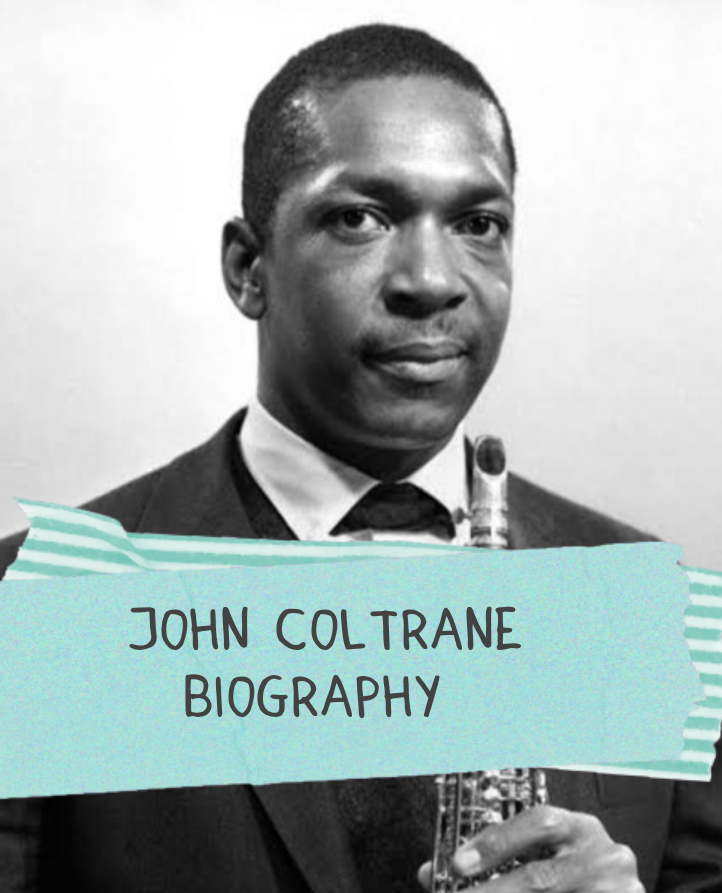
John Coltrane Biography
John William Coltrane, often called Trane, stands as one of the most influential figures in the history of jazz. Born in the United States, he transformed the saxophone from a melodic instrument into a vehicle for profound emotional and spiritual expression. His innovative techniques, relentless pursuit of new sounds, and deep commitment to music continue to inspire musicians and listeners worldwide more than five decades after his passing.
Coltrane’s career spanned from the bebop era through hard bop, modal jazz, and into avant-garde and free jazz territories. He collaborated with legends like Miles Davis and Thelonious Monk before leading his own groundbreaking groups. Albums such as Giant Steps, My Favorite Things, and the spiritually charged A Love Supreme redefined jazz boundaries. His short life produced a vast legacy that shaped modern music and earned him enduring recognition, including a Pulitzer Prize special citation.
John Coltrane Early Life
John William Coltrane was born on September 23, 1926, in Hamlet, North Carolina. His family moved to High Point, North Carolina, when he was only three months old, and that is where he spent most of his formative years. He grew up in a musical and religious household. His father, John R. Coltrane, worked as a tailor and amateur musician who played violin and ukulele. His mother, Alice Blair Coltrane, played piano and sang in church. Both of his grandfathers were ministers in the African Methodist Episcopal Zion Church, which infused the home with a strong sense of faith and community.
Tragedy struck early when Coltrane was about twelve years old. Within a short period in 1938 and 1939, his father, grandparents, and an uncle passed away. This series of losses left the family in emotional and financial hardship. His mother supported them by working as a domestic worker. Music became a vital outlet for the young Coltrane during these difficult times. He first joined a community band around age twelve, starting on clarinet and E-flat alto horn before switching to alto saxophone in high school. He attended William Penn High School in High Point, where he continued developing his skills.
In 1943, shortly after graduating high school, Coltrane and his family relocated to Philadelphia, Pennsylvania, seeking better opportunities. There, he took various jobs, including work at a sugar refinery, while immersing himself in the city’s vibrant jazz scene. He briefly studied at the Ornstein School of Music and Granoff Studios to refine his technique. In 1945, he was drafted into the United States Navy during the final stages of World War II. Stationed in Hawaii, he played alto saxophone in a navy band, gaining valuable performance experience. After his honorable discharge in 1946, he returned to Philadelphia and switched permanently to the tenor saxophone, the instrument that would define his sound.
John Coltrane Age
John Coltrane lived for 40 years. He was born in 1926 and died in 1967 at the height of his creative powers, leaving behind a body of work that belied his relatively brief career.
John Coltrane Education
Coltrane’s formal education was limited but focused on music after high school. In Philadelphia, he attended the Ornstein School of Music and studied at Granoff Studios. These institutions provided structured training in music theory and performance. Much of his growth, however, came through self-study, listening to records, and practical experience playing in bands. He was largely an autodidact who absorbed influences from a wide range of musicians and traditions.
John Coltrane Career
Coltrane’s professional career began in earnest in the late 1940s. He played in nightclubs and made early recordings with groups led by Eddie “Cleanhead” Vinson, Dizzy Gillespie, and others. His first recorded solo appeared on Gillespie’s “We Love to Boogie” in 1951. In the early 1950s, he worked with Earl Bostic and Johnny Hodges before joining Miles Davis’s quintet in 1955. This association brought him wider recognition, though struggles with heroin addiction affected his reliability at times. He overcame the addiction through determination and a spiritual awakening around 1957.
A pivotal moment came in 1957 when Coltrane recorded his debut album as a leader, Coltrane, for Prestige Records. He followed with classics like Blue Train in 1958, featuring his composition of the same name. His time with Thelonious Monk in 1957 further sharpened his harmonic and rhythmic ideas. Coltrane rejoined Davis for the landmark 1959 album Kind of Blue, which introduced modal jazz and became one of the best-selling jazz records ever.
In 1960, Coltrane formed his own group and signed with Atlantic Records. That year brought Giant Steps, an album filled with complex chord progressions and his signature “sheets of sound” technique, where he played rapid cascades of notes. He also recorded My Favorite Things, whose title track became a major hit and signature piece, blending jazz with elements of waltz and exotic scales.
By 1961, Coltrane moved to Impulse! Records, a label that supported his experimental direction and became known as “The House That Trane Built.” He assembled what became known as the Classic Quartet with pianist McCoy Tyner, drummer Elvin Jones, and bassist Jimmy Garrison. This group produced enduring works such as Africa/Brass, Impressions, and the monumental A Love Supreme in 1964. The latter album, a four-part suite dedicated to God, expressed Coltrane’s deep spirituality and achieved both critical and commercial success. It earned Grammy nominations and sold strongly for a jazz release.
Later in his career, Coltrane explored freer forms. He collaborated with Eric Dolphy, then incorporated Pharoah Sanders and his second wife Alice Coltrane on piano and harp. Albums like Ascension and Meditations pushed into avant-garde territory with dense, intense improvisations. He continued performing and recording almost until the end, even as health issues emerged. His final sessions reflected an unyielding search for new musical and spiritual expression.
Coltrane’s achievements include revolutionizing saxophone technique, popularizing modal and free jazz approaches, and infusing jazz with explicit spiritual themes drawn from Christianity, Eastern philosophies, and African music. His influence extends beyond jazz into rock, classical, and world music. Posthumously, he received a Grammy Lifetime Achievement Award in 1997, a Pulitzer Prize special citation in 2007 for his innovative body of work, and inductions into halls of fame. Many of his compositions and recordings have entered the Grammy Hall of Fame and the Library of Congress National Recording Registry. His music appears in films, television shows, and documentaries, ensuring ongoing relevance.
John Coltrane Recent News
As of 2026, the world marks the centennial of John Coltrane’s birth with global celebrations under the banner “COLTRANE 100.” The Coltrane Estate has organized events, including the release of newly discovered live recordings known as the Tiberi Tapes, captured by saxophonist Frank Tiberi between 1961 and 1965. These will appear via Impulse! Records, with a preview on Record Store Day and a full release timed to September 2026. A symphonic show premieres at the Hollywood Bowl on Coltrane’s birthday, September 23. Musicians and institutions worldwide honor his legacy through performances, exhibitions, and educational programs. The John and Alice Coltrane Home in Dix Hills, New York, continues preservation efforts supported by foundations and family initiatives.
John Coltrane Personal Life
Coltrane led a life marked by intense dedication to music, personal struggles, and spiritual growth. He overcame heroin addiction in the late 1950s through a profound experience he described as a spiritual awakening. This turning point deepened his interest in philosophy, world religions, and meditation, which infused his later compositions. He maintained a quiet, disciplined approach offstage, focusing on practice and family amid the demands of touring and recording.
Health challenges arose in his final years. Coltrane was diagnosed with liver cancer and passed away on July 17, 1967, at Huntington Hospital in Huntington, New York. He entered the hospital and died shortly afterward at age 40. His sudden passing shocked the music world and left many projects unfinished, yet his final recordings demonstrated continued creative vitality.
John Coltrane Family
Coltrane married twice. His first wife was Juanita “Naima” Grubbs, whom he wed in 1955. Their marriage ended in divorce in 1966. He composed the ballad “Naima” in her honor, which appeared on Giant Steps. In 1966, he married pianist and harpist Alice McLeod, with whom he had already been in a relationship. Alice Coltrane became a significant musical partner in his later years.
With Alice, Coltrane had three sons: John Coltrane Jr. (1964–1982), who became a bassist; Ravi Coltrane (born 1965), a saxophonist who carries forward the family musical tradition; and Oran Coltrane (born 1967), a multi-instrumentalist. Alice had a daughter, Michelle, from a previous relationship, whom John adopted. The family shared a deep musical bond, with Alice continuing to perform and record after his death, blending jazz with spiritual and Eastern influences. Coltrane’s extended family in North Carolina and Philadelphia remained important to his roots.
John Coltrane Net Worth
At the time of his death in 1967, John Coltrane’s net worth was estimated at around $500,000, equivalent to several million dollars in today’s terms when adjusted for inflation. This figure reflected earnings from recordings, performances, and publishing rights during his active years. His estate has grown substantially over decades through royalties, reissues, licensing for films and media, and ongoing sales of classic albums. The continued popularity of his music, centennial celebrations, and archival releases contribute to the estate’s value today. Exact current figures for the estate are not publicly detailed, but Coltrane’s catalog remains a valuable cultural and commercial asset.
Conclusion
John Coltrane rose from humble beginnings in North Carolina to become a transformative force in jazz and 20th-century music. Despite a career spanning barely more than a decade as a leader, he produced an astonishing volume of innovative work that bridged traditions and broke new ground. His technical mastery, emotional depth, and spiritual intensity set new standards for improvisation and composition. Coltrane’s music speaks to universal themes of struggle, redemption, and transcendence, resonating across cultures and generations.
His legacy lives on through his recordings, the musicians he influenced, and the annual tributes that celebrate his centennial in 2026. Coltrane showed that art can serve as both personal expression and a pathway to higher understanding. For readers discovering him today, his story offers inspiration to pursue excellence with honesty and courage. His saxophone sound remains unmistakable, a testament to a life dedicated to chasing the infinite possibilities of music.
FAQs
What is John Coltrane’s full name and where was he born?
John William Coltrane was born in Hamlet, North Carolina, United States. He is an American jazz icon.
When was John Coltrane born and when did he die?
He was born on September 23, 1926, and died on July 17, 1967, at the age of 40 from liver cancer.
What are some of John Coltrane’s most famous albums?
Key albums include Giant Steps, My Favorite Things, A Love Supreme, Blue Train, and Kind of Blue (with Miles Davis). These works highlight his evolution from hard bop to spiritual and avant-garde jazz.
Who were John Coltrane’s wives and children?
He was first married to Naima Coltrane and later to Alice Coltrane. His children include sons John Jr., Ravi, and Oran with Alice, plus adopted daughter Michelle.
What awards and honors did John Coltrane receive?
He earned Grammy nominations during his lifetime, a posthumous Grammy Lifetime Achievement Award, a Pulitzer Prize special citation, and inductions into various halls of fame. His recordings have received gold certifications and national registry recognition.
How did John Coltrane influence jazz music?
Coltrane expanded improvisational techniques, embraced modal and free forms, and brought spiritual depth to jazz. His “sheets of sound” approach and harmonic innovations inspired countless artists across genres.
Are there documentaries or movies about John Coltrane?
Yes, the documentary Chasing Trane (2016) provides an in-depth look at his life and music, featuring family, collaborators, and admirers. His work also appears in various films and television productions.
What is happening for John Coltrane’s centennial in 2026?
Global events include new archival releases like the Tiberi Tapes, symphonic performances, concerts, and educational programs organized by the Coltrane Estate to honor his 100th birth anniversary.