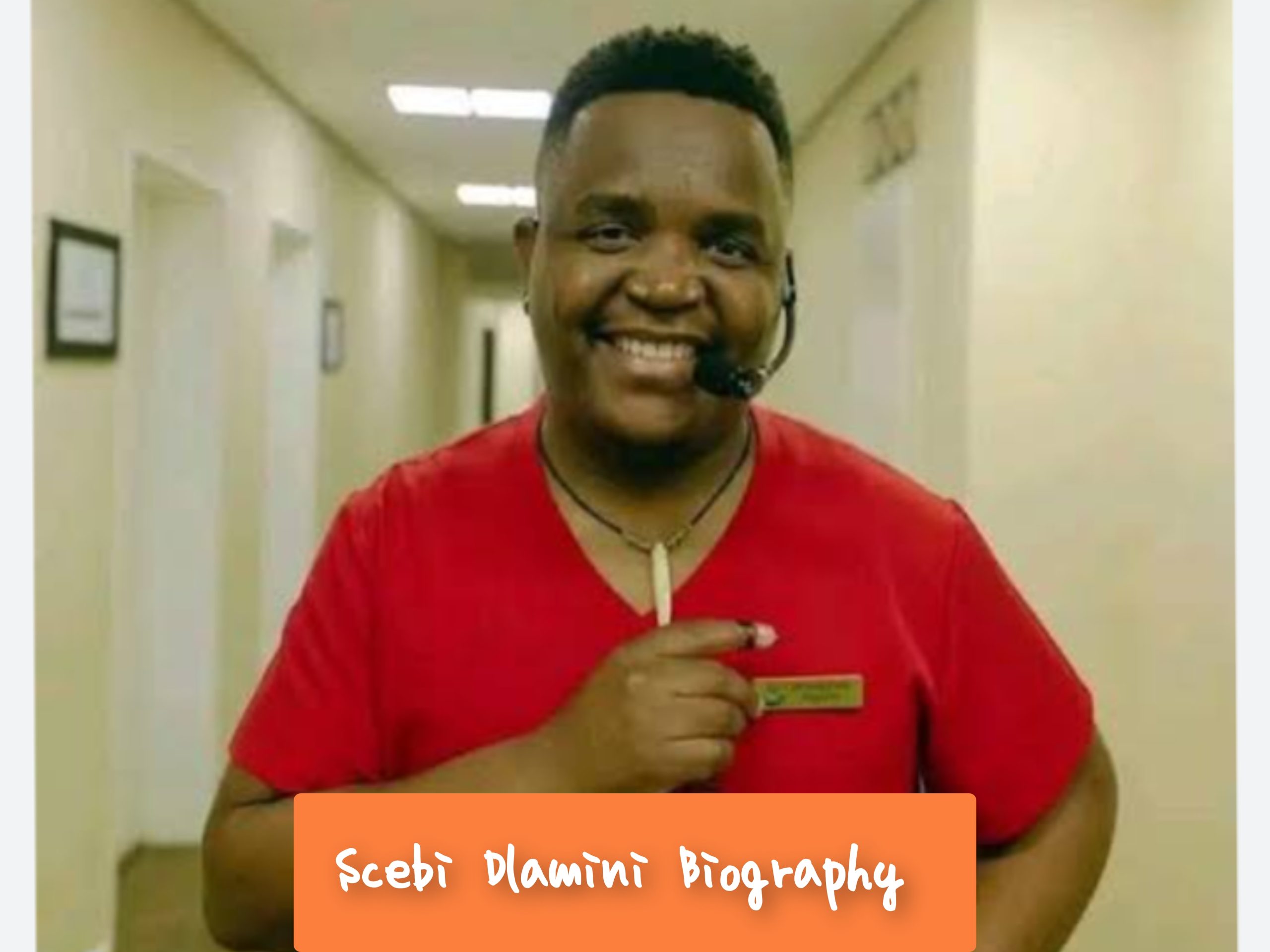
Scebi Dlamini Biography
Scebi Dlamini is one of the most recognisable names in South African maskandi music. Known by his stage name Inkos’yamagcokama, he built a career on soulful guitar rhythms and lyrics drawn from everyday Zulu life, earning him a loyal following across KwaZulu-Natal and beyond. His full name is Sicebi Dlamini, and he was born in Msinga, a rural area in the KwaZulu-Natal midlands, South Africa. He held South African nationality and was proud of his rural roots throughout his career.
Over the course of a decade, Scebi Dlamini rose from a small-town guitarist to one of the genre’s most awarded performers, releasing several albums and hit singles that captured the attention of maskandi lovers nationwide. This biography looks at his background, education, music career, achievements, and personal life, and also addresses the tragic accident that ended his life in August 2026.
Scebi Dlamini’s Early Life
Scebi Dlamini was born and raised in Msinga, a rural community in the KwaZulu-Natal midlands known for producing some of South Africa’s finest maskandi musicians. His exact date of birth has not been made public, as is common for many artists from rural communities whose early lives were not widely documented before fame. What is known is that he grew up steeped in Zulu culture and tradition, an influence that would later shape his entire musical identity.
Dlamini was raised by his parents, Methokayise Dlamini and Thuthelaphi Ngubane, in a household that valued Zulu customs and oral storytelling. Msinga, his home area, has long been regarded as a cradle of maskandi music, and growing up there exposed him early to the guitar-driven sound that would define his career. Many young men in the region learned to play guitar informally, often using homemade instruments, and Dlamini followed this same path before moving on to more structured musical practice.
Life in Msinga was not always easy, and like many artists from the area, Dlamini drew heavily on his rural upbringing for the themes in his songs. His music often reflected real-life experiences, community values, and the everyday struggles and triumphs of people living in KwaZulu-Natal. This connection to his roots became one of the defining features of his artistry and one of the main reasons fans related so strongly to his work.
Scebi Dlamini’s Education
Details about Scebi Dlamini’s formal schooling are not widely documented in public records. Like many maskandi artists of his generation, his most significant training came informally, through community exposure to guitar playing and traditional Zulu musical practices rather than through a formal music school or academy.
His real education, in the artistic sense, came from the maskandi tradition itself. He learned the intricate guitar-picking style associated with the genre by listening to and observing established musicians, absorbing the storytelling techniques passed down through oral tradition in rural KwaZulu-Natal. This self-taught, community-based approach to musical education is common among maskandi artists and helped Dlamini develop the unique guitar patterns that later became his signature sound.
Scebi Dlamini’s Career
Scebi Dlamini’s music career began roughly a decade before his passing, when he started performing under the stage name Inkos’yamagcokama, meaning something close to “the king of the well-dressed” in Zulu, a name that spoke to his flair and stage presence. He built his reputation gradually, performing at local events in KwaZulu-Natal before earning wider recognition through radio play and community festivals.
His breakthrough came with the release of his 2017 album, which included the hit track “Kungcono Ngife.” The song’s rhythmic guitar work and emotionally direct lyrics introduced him to a broader maskandi audience and set the tone for the sound he would refine over the following years. He followed this with further singles and albums that steadily grew his fan base, including the widely loved 2019 track “Asenzele Bona” and the song “Dear Diary,” a collaboration that became something of a national favourite among maskandi listeners.
As his career progressed, Scebi Dlamini released new material almost every year, building a catalogue that spanned themes of love, betrayal, family, and community pride. He performed at major maskandi festivals across South Africa, sharing stages with other respected names in the genre such as Mbuzeni and Thwasa Lekhansela. In September 2024, he announced his first one-man show, titled “Inkos’yamagcokama Live in Concert,” held at the Durban Playhouse, marking a significant milestone after a decade of performing.
By the time of his passing, Dlamini had firmly established himself as one of the leading torchbearers of maskandi music, a genre rooted in Zulu folk tradition and centred on rhythmic guitar patterns paired with high-pitched, soulful vocals. He was known for keeping his lyrics grounded in real experiences, a trait that set him apart from more theatrical performers in the same space.
Scebi Dlamini’s Albums and Songs
Throughout his decade-long career, Scebi Dlamini built a respectable discography of albums and singles that resonated deeply with maskandi audiences. Some of his most notable albums and songs include:
Never Say Never (2017) Dear Diary (2019) One Night Stand (2021) Home Alone (2022) National Anthem (2023) Silent Treatment (2024) True Colours (2025) Ride Or Die (2025) First Class (2025) “Kungcono Ngife” (2017) “Asenzele Bona” (2019) “Dear Diary” featuring Sjava “Babheke Mina” “Intombi Yomfana” “Kuyanzenzakalela” “Ngomthetho Omdala”
These releases showcase the consistency of his output and his ability to remain relevant in the maskandi scene year after year. His songs were frequently played on radio stations across KwaZulu-Natal and featured heavily in maskandi compilations and festival line-ups.
Scebi Dlamini’s Achievements
Scebi Dlamini’s contribution to maskandi music earned him formal recognition within the South African entertainment industry. He won the Best Maskandi award at the South African Traditional Music Awards (Satmas) in 2023, a significant honour that confirmed his standing among the top performers in the genre.
Beyond individual awards, his achievements can also be measured by the loyalty of his fan base and the respect he earned from fellow musicians. He performed alongside established maskandi acts at major festivals, including the Impucuzeko Maskandi Festival, and his 2024 one-man show at the Durban Playhouse stood as proof of how far his career had progressed from his beginnings in Msinga.
His influence also extended to how he represented his home community. KwaZulu-Natal officials and public figures repeatedly credited him with putting Msinga on the map, highlighting his role not just as an entertainer but as a cultural ambassador for his region.
Scebi Dlamini’s Personal Life
Scebi Dlamini remained closely connected to his family and community throughout his life, even as his music career grew. He experienced significant personal loss in the years leading up to his own death. His mother, Thuthelaphi Ngubane, died suddenly in 2021 after falling ill overnight. Two years later, in May 2023, his father, Methokayise Dlamini, passed away in strikingly similar circumstances, also falling ill suddenly during the night at their family home in Msinga.
Dlamini spoke publicly about how difficult these losses were, noting the painful coincidence in the way both his parents died. Despite this grief, he continued to perform and record music, drawing strength from his fans and his connection to his craft. He was known among those close to him for his humility, a quality frequently mentioned by fans, colleagues, and government officials alike whenever they spoke about him.
Scebi Dlamini’s Death
On Sunday, 9 August 2026, Scebi Dlamini died in a car accident in Richards Bay, KwaZulu-Natal. He was travelling to perform at the Basadi Festival when the crash occurred at a traffic intersection opposite Melomed Hospital. Emergency services, including the Road Traffic Inspectorate, uMhlathuze Traffic, and the South African Police Service, responded quickly, but Dlamini succumbed to his injuries at the scene.
Three other people were travelling with him at the time of the crash. One member of his stage crew, identified as Gumu “Gupta” Mchunu, also died from injuries sustained in the accident. The remaining two occupants were taken to hospital for treatment, with one in a critical but stable condition.
KwaZulu-Natal MEC for Transport and Human Settlements, Siboniso Duma, confirmed the details of the crash and extended condolences to the families affected. He described Dlamini as an invaluable asset to the nation and praised him for his humility and his role in putting Msinga on the map. The South African Police Service’s Accident Unit took over the investigation to determine the exact cause of the crash.
Scebi Dlamini’s Legacy
News of Scebi Dlamini’s death spread quickly across South African social media, with tributes pouring in from fans, fellow musicians, and public officials. Many described his passing as a great loss to the maskandi genre and to the broader South African music industry. His death coincided with Women’s Day in South Africa, adding a layer of sombre reflection to the national mood that weekend.
Officials and fans alike expressed confidence that his legacy would continue to inspire upcoming maskandi artists. His music, rooted in authentic storytelling and community pride, is expected to remain influential in the genre for years to come. For many in Msinga and across KwaZulu-Natal, Scebi Dlamini will be remembered as a humble artist who never forgot where he came from, even as his star continued to rise.
Conclusion
Scebi Dlamini’s journey from a young guitarist in rural Msinga to one of maskandi music’s most awarded performers reflects the power of staying true to one’s roots. Over a decade-long career, he built a loyal following through heartfelt storytelling, distinctive guitar work, and genuine connection to his community. Though his life was cut short in a tragic accident in August 2026, his contribution to Zulu folk music and the pride he brought to his home region continue to be celebrated across South Africa. His story stands as a reminder of how deeply personal experience, when translated into music, can resonate far beyond where it began.
FAQs
Who was Scebi Dlamini?
Scebi Dlamini, whose full name was Sicebi Dlamini, was a South African maskandi musician from Msinga, KwaZulu-Natal. He performed under the stage name Inkos’yamagcokama and was known for his guitar-driven sound and storytelling lyrics rooted in Zulu tradition.
What genre of music did Scebi Dlamini perform?
He performed maskandi, a traditional Zulu folk genre characterised by rhythmic guitar patterns and vocal storytelling. He was often described as one of the torchbearers of the genre in South Africa.
What were Scebi Dlamini’s most popular songs?
Some of his best-known songs include “Kungcono Ngife,” “Asenzele Bona,” and “Dear Diary” featuring Sjava. These tracks helped establish his reputation in the maskandi scene.
Did Scebi Dlamini win any awards?
Yes. He won the Best Maskandi award at the South African Traditional Music Awards (Satmas) in 2023, recognising his contribution to the genre.
How did Scebi Dlamini die?
Scebi Dlamini died on 9 August 2026 in a car accident in Richards Bay, KwaZulu-Natal, while travelling to perform at the Basadi Festival. He was declared dead at the scene after the crash occurred at a traffic intersection opposite Melomed Hospital.
Where was Scebi Dlamini from?
He was from Msinga, a rural area in the KwaZulu-Natal midlands, South Africa, a region known for producing several notable maskandi artists.